We are in the midst of an AI revolution, but for many businesses, the promise of "chatting with your data" has fallen short. You upload your documents, ask a question, and get… a vague, incomplete, or sometimes completely wrong answer.
The problem isn't the AI model (like GPT-4). The problem is how we feed it information. The standard approach, known as RAG (Retrieval-Augmented Generation), is fundamentally limited. It treats your knowledge like a pile of unorganized index cards.
GraphRAG changes the game by organizing your data the way a human expert does: by connecting the dots.
The Librarian vs. The Professor
To understand the difference, imagine you need to answer a complex question about your company's history.

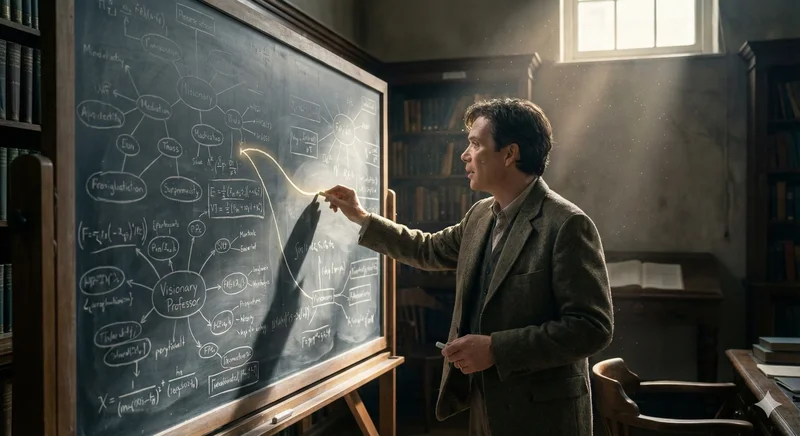
How It Works: Building the Knowledge Layer
GraphRAG doesn't just store text. It processes your documents to build a knowledge graph — a structured map of entities (people, places, concepts) and their relationships.
-
01
Extraction. The AI reads your documents and identifies key entities and claims. "Alex Rivera founded BuildAI."
-
02
Connection. It links these entities. If another document says "BuildAI specializes in GraphRAG," the system links "Alex Rivera" to "GraphRAG" through "BuildAI."
-
03
Community detection. This is the magic sauce. The system identifies clusters of related information and generates summaries for each cluster. It understands "the marketing department" as a whole, not just as a keyword.
The "Global Answer" Superpower
Standard RAG fails miserably at "global" questions like "What are the top 5 recurring themes in our customer feedback from 2023?"
Why? Because to answer that, you need to read everything. Standard RAG can only retrieve a few chunks of text (the "top 5 matches"). It can't see the forest for the trees.
GraphRAG solves this. Because it has pre-summarized communities of data, it can answer global questions by synthesizing these high-level summaries — without needing to retrieve every single customer email.
We build knowledge systems on this exact technology — a knowledge layer that turns your documents into your organization's queryable memory.
- Custom knowledge graph construction
- Secure, private deployment — cloud or on-prem
- Deep reasoning across your whole corpus